Just visiting.....
Thursday, November 18, 2021


Wednesday, August 01, 2018
Goodbye, Shrink Rap

When Clinkshrink, Roy, and I started Shrink Rap in April of 2006, I had no idea of the places that blogging would lead me. We started blogging, and I became a tad obsessed. We all loved the blog, the people we met, and the stimulating discussions and interactions we had with people from all over the world about mental health issues. My thoughts were constantly bombarded with "I have to write a blog post about that!" And write, I did.
ClinkShrink was a little more hesitant. "You're going to get me fired!"she insisted. Roy worried, too, and in fact, he called himself Deep Cover Roy and swore us to secrecy about his identity.
We blogged and we blogged. Then Roy insisted we needed a podcast, and 70 episodes of My Three Shrinks went up on iTunes (they are still there). There was chili and beer and guests who came to be interviewed at our dining room tables.
One night, I was at a psychiatric society dinner, and Roy proudly told someone sitting at our table, "I have a blog!" His secret was out. ClinkShrink decided that it couldn't really be a secret when we were presenting at the American Psychiatric Society's annual meeting. No one got fired.
We wrote two books, Shrink Rap: Three Psychiatrists Explain Their Work, and Committed: The Battle Over Involuntary Psychiatric Care, winner of the APA's Carol Davis ethics award this year. We were on national and local radio, we've been grand rounds and CME speakers for psychiatric societies around the country, and we've given a course on how to blog, podcast and write books. As a direct result of Shrink Rap, we've become columnists for Clinical Psychiatry News and members of their editorial board. We've blogged on Psychology Today, and you know, it's all been good.
The writing has been wonderful, but the people have been the absolute best. We met people who became our real life friends, and we shared in the virtual lives of so many wonderful people, both mental health professionals and tremendous human beings who happened to suffer from psychiatric disorders.
As the years passed, Anne (aka Clink) became busy with so many other projects, and with running the forensic fellowship program for the University of Maryland. Steve (Roy) has changed lives a number of times and now works for SAMHSA. He lost his password to the blog, and while we still get together for crabcakes at Koko's Pub or to hang out in one of our backyards, I've been the only one who has posted on Shrink Rap for quite a long time now. Still, we hold on to our identities as Shrink Rappers, and my friends don't know it yet, but I've reserved us three adjacent rooms (entry set for May, 2053) at a very nice nursing home where they'll let Roy bring his homemade sangria.
I've held on to Shrink Rap. For the longest time it was my forum to express my frustrations with the bureaucracy of medicine, with the inconsistencies and unfairness of a constantly changing world that seemed to create mindless hurdles for both psychiatrists and patients. Sometimes I shared the fiction I wrote, other times I just shared whatever I was thinking about, psychiatry or not. And Shrink Rap opened my mind to all sorts of other viewpoints about psychiatric issues. It became a gateway to discussing controversies and it was a reason to keep current with the mental health advocacy world. My relationship with blogger Pete Earley blossomed into a sweet friendship. TigerMom also remains a friend and my Philly resource. And just last night, Anne and I went to the movies with our beloved (and now retired) book editor, Jackie Wehmueller. There are so many more people who have touched my life in such meaningful ways that I can't even begin to create a list. And there were the selfless people I met here who gave so much of their stories so we could write Committed, and the many other people who contributed to all we learned about the good and bad of involuntary treatments.
Over the last couple of years, I've also been spread a bit thinner, and I've had more places to express my thoughts. Instead of feeling like I couldn't wait to get home to write a Shrink Rap post, it's become something I tell myself I should do once a month or so. When I do post, the comment section remains quiet, and it was probably time to say good bye long ago.
Psychiatry can be an isolating career. My career has not been isolated or lonely and the connection that came with Shrink Rap has truly been a gift. It's been a fabulous experience, and to all our friends and adversaries, colleagues, advocates, commenters, readers, and all the amazing souls I've been so blessed to share this wonderful journey with, I can't thank you enough.
Thursday, June 28, 2018
Anderson Cooper; CNN's special on Finding Hope
https://www.cnn.com/videos/us/2018/06/24/finding-hope-suicide-special-report-full-show.cnn
If you are someone with suicidal impulses, please do watch Finding Hope, it was an excellent show. The host, Anderson Cooper, as well as many of the guests, have lost a family member to suicide.
Wednesday, June 06, 2018
Suicidal Thoughts and Suicide Risk/ The New MD Edge Podcast

As psychiatrists, we see many people who think about suicide -- suicidal ideation is a common symptom of clinical depression. In fact, it's very difficult to get a depressed patient into the hospital if they are not thinking about suicidal. Insurers are generally only willing to pay for inpatient care for people with life-threatening psychiatric illnesses; it's a standard no other medical specialty is held to. Even when someone is dangerous, and when their insurance is willing to authorize an admission, there is still the very difficult issue of finding a bed. Do check out Suicidal: Be Prepared to Wait for Care by Dr. Nathanial Morris, a psychiatry resident at Stanford.
That said, I wanted to introduce you to the the new podcast over on the Clinical Psychiatry News website. The MD Edge psychcast is being hosted by Dr. Lorenzo Norris of George Washington University. I found the interview with Dr. Igor Galynker on assessing imminent suicide risk fascinating. Dr. Galynker notes that people who go on to end their own lives often do not say they are thinking of suicide. And yet that is the standard we use to get people into the hospital! It's an excellent interview, and I can't do it justice in a recap, so I'll ask you to invest 25 minutes of your time and listen here: https://www.mdedge.com/psychiatry/article/165827/depression/approach-assesses-imminent-suicide-risk
Finally, ClinkShrink and I were interviewed by Dr. Norris when we were in New York for the annual meeting of the American Psychiatric Association. If you'd like to hear our interview on involuntary treatment, it can be found here:
https://www.mdedge.com/psychiatry/article/166427/mixed-topics/dr-dinah-miller-dr-annette-hanson-involuntary-psychiatric
Tuesday, May 15, 2018
Recap of the APA's Annual Meeting in New York City
 |
| Heidi Bunes, ClinkShrink, Dr. Joanna Brandt, Dinah |
First of all, we were so excited that our book, Committed: The Battle Over Involuntary Psychiatric Care was awarded this year's Carol Davis Ethics Award for outstanding contribution to the literature in the ethics of psychiatry. We are pictured here with Heidi Bunes, the Executive Director of the Maryland Psychiatric Society, and with Dr. Joanna Brandt, the Chair of the MPS Ethics Committee. We received many compliments on our book and we both felt it was such an privilege to receive this award.
If you've never been to an APA annual meeting, first you need to know that it's overwhelming! There are poster sessions and at any given time there are workshops, symposia, lectures, courses, and events that are held in the Javits Convention Center as well as in the meeting rooms and ballrooms at the Times Square Marriott and Sheraton. If you don't go early to a popular session, you can be sent to an overflow room or simply squeezed out. Some of the sessions I wanted to go to had no room in the overflow rooms! Some years there are very famous speakers: Alan Alda, VP Joseph Biden, Oliver Saks, and Desmond Tutu come to mind from past years.
This year, I decided to make a point of covering one of the sessions for my column in Clinical Psychiatry News and you can read here about a symposium on Issues and Controversies with Medical Marijuana chaired by Dr. Godfrey Pearlson.
On Tuesday, I chaired a workshop on the Role of Involuntary Treatment in Preventing Violence. On Saturday evening, I attended a session with pianist/psychiatrist Richard Kogan who discussed the life and psychology of composer Leonard Bernstein illustrated with his music. Other sessions I went to included "the gun talk," stimulant use in ADHD, stimulant misuse in ADHD, how the digital world is changing us. Aside from that, there was catching up with friends and checking out the restaurants in the Big Apple.
Next year: San Francisco.
Sunday, April 15, 2018
That Way Madness Lies
I thought this would be of interest to our readers!
“THAT WAY MADNESS LIES…” To be screened at the Richmond International Film and Music Festival
BowTie Criterion
1331 N Boulevard
Richmond, VA 23230
Saturday, April 28. 2018 at 11:45 am
Tickets available at: https://riff.eventive.org/schedule/5a9b7075bc24000014eeecc2
Q&A with filmmaker Sandra Luckow
Q&A with filmmaker Sandra Luckow
New York, New York April 15, 2018 – THAT WAY MADNESS LIES…, an award-winning feature length documentary (Best Feature Documentary at the Hot Springs International Women’s Film Festival) about severe mental illness and its effects on a family, their struggles with the mental health system and the law enforcement system, will be shown on Saturdayy, April 28, at 11:45am, to be followed by a Q&A with filmmaker and Yale School of Art faculty Sandra Luckow. There it will receive a special Jury Award. First responders in law enforcement and crisis management, mental health advocates and families dealing with a mental health crisis are especially encouraged and welcome to attend.
“Most honest portrayal of how severe mental illness ravages families and lives that I’ve seen!” - Pete Earley, author of CRAZY: A Father's Search Through America's Mental Health Madness.
Film synopsis: One woman and her family trek the broken mental health system in an effort to save her brother as he descends into madness. Beginning as a testimony of his sanity, his iPhone diary ultimately becomes an unfiltered look at the mind of an untreated schizophrenic.
Duanne Luckow, 46, began a scary, dangerous and ever-escalating cycle of arrests, incarcerations and mental institutional stays. Three months into his first court-ordered 180-day commitment at Oregon State Hospital, Sandra Luckow, his sister and filmmaker, visited him. He gave her his iPhone with 250 video clips. He wanted his experience documented. With their cameras, they expose an ineffectual and inhuman system as well as delve deep into the strength of family ties. Yale School of Medicine and the Global Mental Health Program at Columbia University say the iPhone footage Duanne shot as he descended into madness offers a rare, unprecedented, unfiltered look at the mind of an untreated schizophrenic. This is a specific harrowing story about a singular family trying to find its way through society's imperfections, stigmas and prejudice when dealing with mental illness. It is a search for answers - a free-fall into a quagmire of conflicting interests, policies, and despair.
“The title of the film, THAT WAY MADNESS LIES…is a quote from Shakespeare’s King Lear, Act III, Scene IV. It speaks to the complications of dealing with mental illness, and our own uncertainties as to which direction we should pursue towards wellness and peace. “It is my greatest hope that this film will be an agent for changing the way we deal with our mental health in America,” says director Luckow.
“This is the only film that I know of that has risen to the task of representing the terrors and tragedies of psychosis accurately and with immediacy and therefore the only one I know of that can truly serve educational and advocacy functions in changing the mental health system to one that promotes recovery and community inclusion as opposed to chronicity and dependency.” – said Larry Davidson, Ph.D. Professor of Psychiatry, Yale School of Medicine, one of the many psychiatric professionals around the United States who have called this film an important and accurate depiction of mental illness — one that should be seen by policy makers and those who care about the care and treatment of people living with mental illness in America.
For further information about the film please visit the film’s website at www.madnessthemovie.com.
Wednesday, April 11, 2018
Antidepressant "Withdrawal": Why Aren't Psychiatrists Seeing this "Common" Problem?
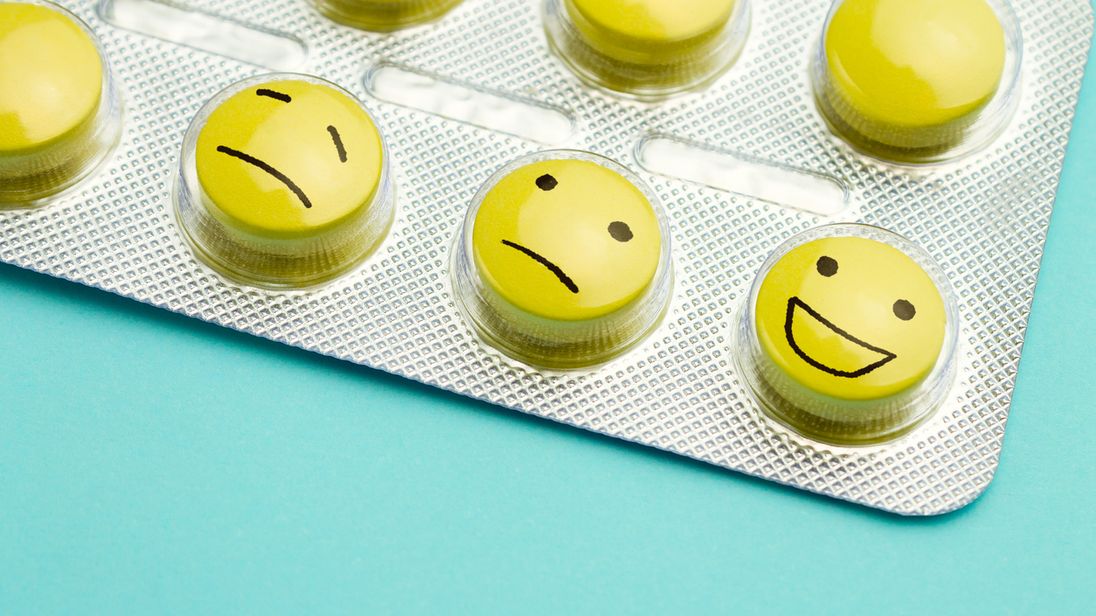
Over on The New York Times website, there is an article titled, "Many People Taking Antidepressants Discover They Cannot Quit. " Benedict Carey and Robert Gebeloff write about how long-term use of antidepressants is increasing, and some people have difficulties coming off the medications with symptoms that constitute a discontinuation syndrome. I'll let you read the article rather than quote it, because there was a lot wrong with the piece.
It doesn't feel like a new idea that there are people who have
protracted and miserable discontinuation syndromes--distinct from a
recurrence of symptoms-- after stopping antidepressants. People have been writing in to Shrink Rap about these difficulties for the
past decade, there are online forums around it, and The New York Times Magazine did a cover story by a man who stopped his Effexor and went through a difficult time with discontinuation symptoms back in 2007.
I
don't think any psychiatrists were surprised to read that SSRI's have a
discontinuation syndrome, and because of the symptoms that can develop, we routinely advise people to come off SSRIs and SNRIs slowly, especially from those medications that have a shorter-half life like Paxil and Effexor. The question is not whether people might have symptoms, but about how
difficult it is to manage these difficulties and how long they might last. So while we have
all seen people who have some discomfort after stopping a short
half-life SSRI or SNRI, we think of this as something we manage by
slowing the taper, switching to Prozac with it's very long half-life, or waiting it out with the idea
that symptoms will resolve in 1-3 weeks. What's different in this
article is the idea that this is common, that patients struggle with intolerable symptoms
even when they undergo a very slow taper, and that these symptoms can last for months or even years.
The article is one-sided in that it talks about the misery of the
discontinuation syndrome with the overtone that "if only the doctor had
told me that this would happen, I never would have taken the
medication." The article completely neglects the misery and dysfunction
of the disorders that lead people to start these medications to begin
with!
The article doesn't mention that one common reason for symptoms upon stopping --for example anxiety or sleep problems -- may be the recurrence of the initial problem that they medication was treating. In some people, depression is an episodic issue and people can come off medications, with other people, depression, anxiety, obsessive compulsive disorder, premenstrual mood difficulties, and other problems these medications are used to treat are more chronic problems. In these cases, stopping the medication may be like stopping insulin or synthroid: the problem is still there and staying on the medicine may make more sense.
I think it's easy to be dismissive of the
prolonged discontinuation syndrome-- to say that the symptoms simply
don't last that long or cause that much misery, and if they do then the patient has obviously had a recurrence of their initial symptoms, something else is wrong, or it's all "in their head"--meaning we don't believe the person is actually having the symptoms they say they are having and they are a result of suggestibility or hysteria.
So what's good about this article is that it increases awareness of the issue and those people who are having difficult discontinuation problems may well feel a sense of validation in knowing that other people have the same constellation of symptoms.
I believe that there are patients
who have these long and miserable discontinuation problems -- many have written into the comment section of Shrink Rap over the years, and The New
York Times found some to interview, including one
psychiatrist who was having trouble coming off Cymbalta. What I
haven't figured out is this: Why haven't I ever seen any of these
patients? It seems that when people have trouble coming off
antidepressants, that slowing down the taper works, or the symptoms are
self-limited and resolve in 10 days, or the patient decides to resume
the medication. So while I've read about these miserable stories for a
decade now, I've never seen someone have a protracted and miserable time coming off despite a slow and careful taper. It's been 25+ years and a lot of SSRIs, including many people who casually mention that they stopped taking their medications without consulting me first. I asked in an online forum if other psychiatrists have seen this phenomena, and a few mentioned that sometimes patients had trouble stopping antidepressants, but no one offered that they had seen this degree of misery. So while I do believe it exists, I also think it's not terribly common in psychiatric practice, that for most people discontinuation symptoms can be managed with careful and thoughtful tapering, and that while some people may have extreme difficulties, these awful scenarios are not "common" as The New York Times article asserts.
But there is a lot wrong with this article. There is the fear that the article will serve to scare people who might benefit from medications, and thereby discourage people from getting treatment. We've seen that already: when a black box warning was put on antidepressants regarding suicidal ideation in children and adolescents, prescribing went down, and suicide rates went up. Figuring out this balance is difficult, and it would be so nice if we knew who might benefit from medications and who is more likely to be harmed than helped by medications.
Finally, what's really wrong with this article is that it uses language that likens antidepressants to addictive drugs of abuse, and it stigmatizes those who need to continue them. People don't get addicted to anti-depressants: they don't use them to get high, they don't crave the medications, and they don't engage in addictive behaviors such as escalating the doses without medical guidance or getting medications in deceptive ways. Awareness of a problem may be good, but it needs to be done in a responsible and balanced way.
Monday, April 02, 2018
Stop Stigmatizing Psychiatric Treatment!

Stigma is a sticky, two-sided issue, one that we talk about often in our field of psychiatry. Many things are stigmatized. While mental illness is an obvious one --and I'll come back to this-- many other things are stigmatized as well. To name just a few: drug use, smoking, being a criminal, going to jail, behaving in a disruptive way, smelling badly and being physically unkempt in certain settings, begging for money in public, being on public assistance (in certain circles), beating your children (again, in certain circles), incest (in all cultures), being morbidly obese (especially when it happens in someone who makes poor food choices, as opposed to being the result of an illness), suicide, behaving badly after drinking alcohol, sexually harassing your colleagues in certain circles, and I could go on and on.
Stigma, as you can tell by my short list, is a bit diffuse and subject to individual consideration, pertains to lots of troublesome behaviors, and depends almost wholly on the environment and consideration of others, and what is stigmatized changes over time. While stigma is troublesome in that it causes people to feel shame and self-loathing, it also has a role in society. Stigma inspires some people to change or avoid certain behaviors. People certainly smoke less since it's become highly stigmatized and those who want to smoke at work are sent out into the cold to stand in little boxed off smoking areas. There is a stigma to going to prison and being labeled a criminal and this is part of the deterrent to crime. While suicide rates are rising, many people still don't end their lives for fear of stigmatizing their family, and as much as I see suicidal thoughts as a symptom of an illness, I do imagine that more people would choose to end their own lives if it left a legacy with no stigma whatsoever. While it may have once been cool to be a "player," it's no longer okay to grope your co-workers.
But what about mental illness? Mental illness is not a behavior and it's not a choice, it's a constellation of uncomfortable psychic events, or symptoms, and sometimes having a mental illness leads people to behave in stigmatized ways. But the illness itself? Yes, it's mostly still stigmatized, despite our best efforts, but some conditions certainly more so than others. We have not really clarified exactly what mental illness even is, but the reaction you'll get to saying you've had panic attacks in the past may be a bit different to the one you'll get if you announce that during manic episodes you run through the streets naked and max out your credit cards.
So I don't want to talk about the stigma of mental illness and substance abuse today, I want to talk about the continued stigma of getting treatment for these issues. Because one of the problems with stigma is that it discourages people from admitting to themselves or others that they have these problems and getting help, and so the treatment itself is stigmatized.
This is the funny thing: most things that are stigmatized are unpleasant or have unpleasant consequences. Jail is uncomfortable and leaves you with a bad mark. Getting psychiatric treatment is not usually unpleasant, and it often leads to very GOOD things. Being in therapy is stigmatized in many circles, but once over the hurdle, people ENJOY coming to therapy. You talk to someone who cares about you about the difficult things in your life, you have a safe place to process what goes on in your head, and often just talking is a relief. Most people like their therapists and look forward to sessions. If things are not going well, the session is a place to process what's going on, to have someone who listens with concern, who may or may not offer helpful suggestions, who carries your history and story. This can be a great relief and a tremendous comfort. But people don't just come in when the world is crashing, often they are happy to come to a session and announce that things are going well! They want their therapist to be pleased for them. And therapy is about the same things for everyone: talking about the stuff you can't talk to everyone else in your life about, often talking about issues with interpersonal relationships, and the obstacles to getting what you want out of life. It's the same for those with serious mental illness as it is for those who function well. So why do we stigmatize something that people enjoy, that helps them? This I find perplexing.
And what psych meds? The stigma that comes with taking them is huge and there is even a culture of what some have called "pill shaming." Granted, some medications have side effects or cause weight gain or sexual dysfunction, it's not all good. But many people take psych meds and feel so much better. They become more functional, they feel less misery, they stop hearing voices, they stop behaving in those ways that are associate with mental illness and they gain a resilience and reserve that is helpful. Yet most people don't proudly announce that they get monthly antipsychotic injections or that lithium has been a live saver that allows them to have their highly functional life. At one point, it was probably fine to say you popped a Xanax for anxiety, but now even appropriate benzodiezapine use use gets lumped in with addictive issues.
And rehab? Oh, my, outside of Recovery circles, most people don't advertise that they have been to detox or rehab. Why not? Good rehab is a wonderful thing. It takes people out of the foxhole of addictive misery and gets them back into a place where they can love and function.
We're never going to stop stigmatizing mental health problems, especially if we continue to insist that they are the cause of people becoming mass murderers. But let's work hard on it: mental illness does not explain many things that the American public thinks it does. And let's try very hard not to stigmatize treatment! Treatment is good, it gives people their lives back, it helps them shed oppressive symptoms, it feels good and it's nothing to be ashamed of.
Wednesday, March 28, 2018
A Plea For Smart Guns, The #MarchForOurLives Rally, and Talking with Dr. Weinstein About his Experiences With Involuntary Care

That said, I now want to point you to the more serious stuff I have been been writing and thinking about lately. For the first (and last) time ever, my original artwork is available to be seen in a national publication. Over on Clinical Psychiatry News, I have an article talking about the very moving #MarchForOurLives rally I attended in Washington, D.C. on March 24th. The speakers were all children and teenagers and they were amazing! I wanted to add one thing to their requests for gun control: a plea for Smart Guns. The artwork, as seen above, is the sign I made and carried. As you may be able to tell, my artistic abilities arrested somewhere in late elementary school. That said, please do read my article here:
https://www.mdedge.com/clinicalpsychiatrynews/article/161834/health-policy/why-isnt-smart-gun-technology-parkland-activists

Dr. Weinstein's essay caught my interest, because in researching Committed, I did not find that most people who were involuntarily treated felt gratitude--especially if they were physically restrained--even if they did get well. I called Dr. Weinstein and he agreed to speak with me specifically about his experience with involuntary psychiatric care. Please do read about our discussion at HERE:
https://www.mdedge.com/clinicalpsychiatrynews/article/161357/depression/trauma-surgeon-shares-story-involuntary-commitment
Sunday, March 04, 2018
On Forcing Street People to Get Psychiatric Treatment

The story is a tragic one about a promising woman whose future, and ultimately her life, are lost to mental illness. Despite so many people who loved and cared about her, and so many who tried to get her help, Ms. Williams dies alone on the street. She is young, and she dies of a treatable disease, a pulmonary embolism. Mr. Weiser does a commendable job of re-creating her story and tracking down the people who knew her in the years before and during her psychiatric decline. To his credit, he just tells the story; he doesn't turn it into a plea for laws that make it easier to involuntarily treat people, and he doesn't go on about how this was a life that could have been so much different if only she had been forced to have psychiatric care. I found the story to be a richer one told simply as it was without the moralizing.
So having said that, I am now going to invoke my role as an expert on involuntary treatment to talk about the plight of the "homeless mentally ill." Why the quotation marks? Well, first I'd like to differentiate those who are homeless from those I prefer to call 'street people.' You are homeless if you are an adult without a stable residence, and most people who are homeless are not sleeping on the streets. They may be in shelters, in motels or the single room occupancies, or staying in the guestroom or on the couch of a friend or relative. Those who are actually sleeping on the streets are our society's sickest and most disenfranchised members. The quotations also serve to remind me that "the mentally ill" is not a term I like to use: these are people with psychiatric disorders, not to be defined by those disorders. While many like to talk about the plight of the homeless mentally ill, I'd like to suggest that as a society, we should invest our resources in helping all of our countrymen who sleep on the streets, whether they are mentally ill, addicted, or simply indigent.
In a wealthy country such as we are, the fact that there are people who spend their nights on the street should be a source of shame to all of us. Logically, this can't be about money: there is nothing cheap about leaving people on the street-- to start with, they have high medical expenses, and high incarceration rates. One way or another, they cost us all money. Personally, I don't believe it should be legal to sleep in public places, and as a society, we should feel obligated to provide sick and destitute people with more than a nighttime cot in a room with other people where they may not be safe.
If you've followed my Shrink Rap posts, or read our book, Committed: The Battle Over Involuntary Psychiatric Care, then you know that the issues of involuntary treatment are nuanced and complex, and that I think it should be avoided when possible as there is the risk that involuntary care leaves some people feeling traumatized and angry, and because we all cherish the right to make our own medical decisions. You also may know that I'm not much for invoking "anosognosia" as a reason to force people to have treatment, and do see my post on this over on Psychology Today. But you may also know that I believe there are times when there really seems to be no choice but to force treatment, and when it is simply the right thing to do to keep everyone safe. A traumatized patient is better than a dead patient.
So what about Nakesha Williams, and others like her who are "dying with their rights on." I messaged Mr. Weiser, the NY Times journalist, and asked him if she had ever been treated. In the article he talks with friends who have tried to get her help, and with case workers from a mental health agency who tried to engage her, all of which she refused. Mr. Weiser thought Nakesha had been in treatment briefly when she was younger--he didn't know for sure if she had ever taken medications-- but it does not appear that she had any treatment in the years she lived on the streets of New York City. Her family had long before lost contact with her.
So Mr. Weiser didn't say it, but I will: if people suffering from psychosis are living on the streets, unprotected from the elements, at risk of illness or of being prey to criminals, and they are so ill that they are refusing offers of housing, healthcare, and help getting financial entitlements, then they should be hospitalized and treated against their will. As traumatic as forced care can be, I believe it is preferable to the obvious risks people on living on the streets face each and every day, and would offer them a chance at a safer and more productive, less tormented existence. Ms. Williams was certainly a risk to herself, and her story is one of society's shame.
So do we need new laws to get Ms. Williams and those in her situation care? I don't believe we do: she was a risk, as can be seen by her untimely death, and as I've said above, I don't think it is a person's right (or it shouldn't be) to live in public places. Would treatment -- and in this case, I specifically mean antipsychotic medications-- have changed her life? I don't know, but I would hope so.
There, I said it. Now please let me add a plug for Housing First options that place people in housing without first requiring them to be free from drugs or alcohol, or to accept psychiatric care, as a condition of housing.
Thursday, March 01, 2018
What's Caught My Attention Lately....

It's been just about a month since I last posted here, and what a month it's been. I was away for a couple of weeks on a wonderful family vacation to Vietnam and Cambodia. While it was a mostly psychiatry-free trip, the sign above did grab my attention. It was a sign at the ecolodge where we were staying in Mai Chau, a rural area of Vietnam where water buffalo are still used as work animals in the rice paddies. Why are persons with mental illness not permitted in the pool? I have no idea, but it seems that stigma is rampant everywhere.
So do let me give links to the things I've been writing and thinking about.
~When I last posted on Shrink Rap, it was in response to Pete Earley's mention of 'the worried well.' Pete also ran my response and John Snook of the Treatment Advocacy Center wrote Pete a separate letter which he put up as it's own post. By all means, do join in the fuss over on Pete's Facebook page where he entertains comments.
~I moved venues and put up a somewhat related post on PsychologyToday called The Perplexing Semantics of Anosognosia: Why An Obvious Phenomena Has Sparked Controvery. See what you think, and I look forward to your comments.
~Over on Clinical Psychiatry News, I've written two articles on everyone's favorite topic: Medication Prices. In the first article, I did some comparison shopping for Abilify (aripiprazole) and Provigil (modafanil) and found that the prices varied by HUNDREDS of DOLLARS (and yes, I did mean to yell) per month, depending on the drug store. In the Second article, I interviewed GoodRx.com co-founder Doug Hirsch and learned about how drug prices are set and why GoodRx is able to offer deep discounts.
Finally, I'd like to send you over to today's New England Journal of Medicine to read a powerful article about a surgeon who was involuntarily treated for a suicidal major depression.
Thursday, February 01, 2018
Insurers, Not Legislators, are the Gatekeepers to Care, and a Call to Deep Six the Term "Worried Well."
Over on Pete Earley's blog, there is a post titled:
Senators’ Letter To SAMHSA Is Misguided: Dr. McCance-Katz Is Doing What Congress Demanded
Pete is on the Interdepartmental Serious Mental Illness Coordinating Committee, a group operating under the Department of Health and Human Services. He is an extraordinary writer and a tremendous mental health advocate. His post inspired me to rant at him (Me rant? Shocking, I know...) and Pete and I are both posting my response. I can't begin to capture the essence of his post on the controversy over the NREPP website, nor will you need to understand that to read my response, but please read about it at the link above.
____
Dear Pete:
Thank you for your
latest blog post on the work Dr. McCance-Katz is doing and thank you,
again, for serving on the ISMICC. Let me start by saying that after 25+
years as a psychiatrist, I've never heard of the NREPP website, so I'm
not certain whether it's it is a good thing or a bad thing that the
website is now down. Instead, I'd like to respond to some of the things
that were said in the course of your blog post.
You
used the term "worried well." Please don't use that term, ever. It
implies that there are people with legitimate suffering because they
have "real" mental illnesses, and those whose suffering is trivial
because they don't have "serious" mental illness. Suffering is
suffering-- it all hurts, and sometimes those with no obvious signs of
mental illness surprise us all when something suddenly goes horribly
wrong. Psychiatric care is expensive, poorly reimbursed, time consuming,
and stigmatized; people don't present for treatment for trivial
reasons. There is the implication that some people are more deserving of
care in a way we would never dream of bifurcating in any other field.
Could you imagine if you went to the ER with chest pain and were derided
because it turned out you had heartburn or a pulled muscle and were not
having a heart attack? As doctors, we help people who are in distress,
we don't make the distinction about whose suffering is valid and worthy
of treatment.
I am all in favor
of giving more resources to people with chronic and disabling mental
illnesses -- these are society's most disenfranchised members, their
suffering and the suffering of their families is immense, and they use
our resources one way or another. If not through appointments with
psychiatrists and the cost of their medications, then through lost
productivity, the cost for medical care incurred from unhealthy life
styles, and the cost of institutionalization. What I find difficult
about these discussions is that psychiatry is the only arena where
advocates ask for money for one set of patients at the expense of
another. We don't ever suggest that money to treat metastatic lung
cancer should come from denying treatment to those with basal cell
carcinomas.
While
I have you here, I'd like to bring up a related topic that perhaps you
can get the ISMICC committee to look at, one that all of us might be
able to agree on. When the topic turns to
serious mental illness, the loudest and most controversial agenda is
about legislation to make it easier to involuntarily hospitalize
patients. While there are cases where this is an issue, for those of us
in practice, there is a bigger issue: the real
gatekeeper to getting very sick people adequate and optimal care is not
the law, the gate keeper is the insurance/mangled care industry.
Insurers have a erected a barrier to inpatient treatment which has
set the standard for admission as "imminent danger." There are times
when everyone can agree
that a patient needs to be in the hospital: the patient, the family, the
doctor, but if that patient does not present as being dangerous, it has
become nearly impossible to get him or her into a hospital bed. This
has
trickled into our standard of care: psychiatrists no longer try to
hospitalize patients who are not dangerous (usually suicidal) because
they believe an insurance company will not authorize the the admission,
that an ER will release the patient.
So
the few available beds fill with
admissions from the ER of people who are so depressed or so psychotic as
to be dangerous, and elective admissions just don't end up
happening. What does happen is that the few available inpatient beds get
taken by very ill, very dangerous patients and the acuity level on
inpatient units is very high. They often require security officers, and
the environment is anything but healing; in fact, inpatient units have a
high rate of assaults for both the patients and the staff. And then we
wonder why people won't voluntarily admit themselves to these units
when they are sick. This is the point where people in favor of easier
standards to involuntarily admit patients shut me down: they say the
patients have anosognosia, they don't know they are sick and they won't
get care no matter what, and issues of safe, healing environments or
medications that don't cause awful side effects are irrelevant. I beg
to differ with that argument, and still contend that if psychiatric care
was kinder, better funded, more palatable, and not stigmatized, then
more of those who are not aware they are ill could be swayed to get
care.
Psychiatry is the only medical specialty where the standard for
admission has become life-threatening illness, not just being really
sick.
It would
be so helpful to all of us if there were more beds available and if
insurance companies were not allowed to deny admission to very sick
people because there was not an imminent threat of death. I do believe
that is something that everyone in all the tents can agree on, and it's a
good starting gate for all of us.
Tuesday, January 09, 2018
One Doctor's Struggles With Depression, Addiction, and Recovery: Finding Hope in An Intolerant Profession

Psychiatric News is running a series on Physician Burnout, part of an initiative by APA President Dr. Anita Everett. They asked me to write about medical licensing for the series, and in the course of writing the article, I spent a while talking to Dr. Luther Philaya, an Emergency Room doc who lost his license for his addiction to alcohol and opiates. Dr. Philaya sought help and things did not go smoothly. Instead of writing about licensing, I ended up writing about Luther, and I'll invite you to read, "System Changes Needed to Support Physician Seeking Help."
 Dr. Philaya had more to say about the stigma of being a physician in recovery and wrote his own Op-ed piece for the Star Tribune. Reprinted below, with his permission
Recovery from addiction doesn't get the community support it needs
It's no small achievement, but, surprisingly, it's greeted as an ongoing social stigma.
In
the fall of 2012, I entered treatment for addiction as a broken
physician and man. Opioids were one of my drugs of choice, as they are
for so many in today’s society. After weeks of intensive therapy, I was
able to let go of the demons that had haunted me for decades, ones that I
had medicated away with drugs and alcohol. More than 100 days later, I
left the treatment facility with a renewed vigor for life — physically,
mentally, emotionally and spiritually. I was eager to return to my
medical practice with a completely different perspective, including a
heightened sense of compassion and empathy for patients struggling with
mental illness and addiction.

I looked
forward to being welcomed back at my place of work as well as in my
community. As with a cancer patient enduring grueling treatment and
receiving compassion and empathy from family, friends and co-workers,
surely there would be those eager to help with my transition. Maybe a
casserole or two would be waiting, or a few get-well cards. Without a
doubt, my workplace would help with my reintegration back into practice.
Sadly, I
quickly realized that recovery from substance-use disorder is not
celebrated by those outside of the recovery community. To the contrary,
recovery — like active addiction — is stigmatized in our society. Rather
than welcoming me back, I became a pariah among my co-workers of 22
years. Former friends were, for the most part, gone. What support there
was came from the recovery community, but even there I fought shame. I
learned to quickly — quietly and with furtive glances — enter and exit
church basements or recovery clubs.
“Anonymous”
became my mantra. The guilt and shame I experienced while in active
addiction were there to welcome me into the recovery world as well. I
began meetings by proclaiming, “Hi, I’m Luther and I’m an addict. I’m
powerless over my addiction.” I learned to fear that I was one small
step away from relapse.
Recovery
organizations such as AA have done incredible things in the battle
against substance-use disorder. I have benefited from their program. But
as a person in recovery, now that I have a clear mind, I believe I’m
quite powerful against returning to my addiction as long as I maintain a
disciplined recovery lifestyle. My rational brain is able to make the
choice not to return to that life. Being reminded that I am an addict
only perpetuates my shame, while trapping me in a toxic thought process,
including ongoing shame about my own recovery.
A while
back, I decided that I couldn’t survive my own recovery this way. I am
proud of that decision; it is the crux of all aspects of my health. I’m
done hiding my recovery. I will let the public know I’m not ashamed.
I admire
the tenacity and persistence of those involved in changing the public
stigmatization toward the AIDS epidemic. Through hard work by activists,
the public perception of HIV as a gay man’s disease brought on by poor
moral choices has changed. Where once HIV was feared and the sufferers
stigmatized, it has become one of the many diseases that afflict
humankind. Today, HIV sufferers no longer need to hide in closets of
shame.
Recovery
needs to be treated in a similar manner. There are movements afloat that
celebrate recovery. The message is getting out that recovery need not
be shameful. But the public needs to embrace those on this journey as
well. Communities, not just recovery organizations, need to become
recovery-friendly.
Imagine a
sign reading: “Welcome to Minnesotaville, a recovery-friendly community”
or “Welcome to our coffee shop, a recovery-friendly establishment.”
Imagine a bumper sticker that reads: “Proud parent of a child in
recovery.” Imagine communities making recovery fashionable, trendy and
celebrated. Rather than wringing our hands over the depth and breadth of
the current drug epidemic, communities can offer warm, welcoming
environments.
I’ve
changed my perspective. Rather than proclaiming that I’m an addict, I
will proudly introduce myself as “a person in long-term recovery, which
means I haven’t had a drink or used a drug since Oct. 11, 2012.”
Now that’s recovery.
Luther Paul Philaya, of Woodbury, is a physician.
Link to the original: http://www.startribune.com/recovery-from-addiction-doesn-t-get-the-community-support-it-needs/468386213/
Saturday, December 30, 2017
Oh For A Self-Correcting World

Here in Baltimore, things are difficult for so many people: firearm deaths have surged, with 345 deaths this year -- a far higher number than New York City where there are under 300 deaths, even though New York has many times the population that Baltimore has. Overdose death have surged as well. Crime, poverty, homelessness,--they are all big problems. The latest tax cuts promise to help corporations, and perhaps they will be good for the overall economy, but I worry about the effect these legislative changes will have on access to health care, and on our country's most vulnerable people. And even among the "haves," depression and anxiety is rampant, suicide rates are high, substance abuse disables and kills, and we talk about doctor burnout and suicide in a country with physician shortages. It's all disheartening.
I wish innovation were easier. Our war on drugs has been a failure, and in moments of desperation, all sorts of things get tried. Then sometimes, the 'solutions' become part of the problem. For example, Physician Health Programs were an innovation to help struggling docs, and they have been very helpful for many, but there have been reports of abuses, and over on Clinical Psychiatry News, I wrote an article asking if PHPs were diagnosing for dollars. Rehabs have popped up everywhere, but many of them are not using evidence-based treatments, and so much of treatment for opioid abuse still focuses around blaming the patient, moral failures, and an emphasis on abstinence-based treatments which are wonderful if they work for you and terrible if they leave you dead when a medication-based treatment might have given you some chance to live. Given all the failures in our war on drugs, I might like to see how things transpire if we decriminalized all drugs of abuse, but somehow these things happen in sweeping moves, and if that doesn't work, it's hard to undo.
Medicine has adopted Electronic Medical Records as a standard. They add hours to a doctors day, contribute to physician burnout, and don't clearly improve the quality of patient medical records or clinical care: in fact many patients don't like talking to doctors who are clicking away and not getting to know them as people. Maybe it's still growing pains, and surely the databases they generate are helpful in research to learn about factors that effect disease and the efficacy of treatments. Maybe we will grow into these records, but they were rolled out with incentives, or in hospitals where they cost hundreds of millions of dollars, so at this point, there is no going back.
 So I long for a world where we could try innovative changes -- in how we tax people, in how we address epidemics, in how we solve a multitude of problems, not by using the methods of the person who speaks (or tweets) the loudest, but by trial and error, with test runs on small segments of the population, with the ability to go back or try something new (easily) if what we try doesn't work. Gun control, physician burnout, drug treatments, interventions for those who are suicidal...you name your problem. Oh for a self-correcting world.
Monday, December 04, 2017
Recent Reads: Black Man in a White Coat and Vengeance
I just wanted to put up a quick note about two books I've read recently.
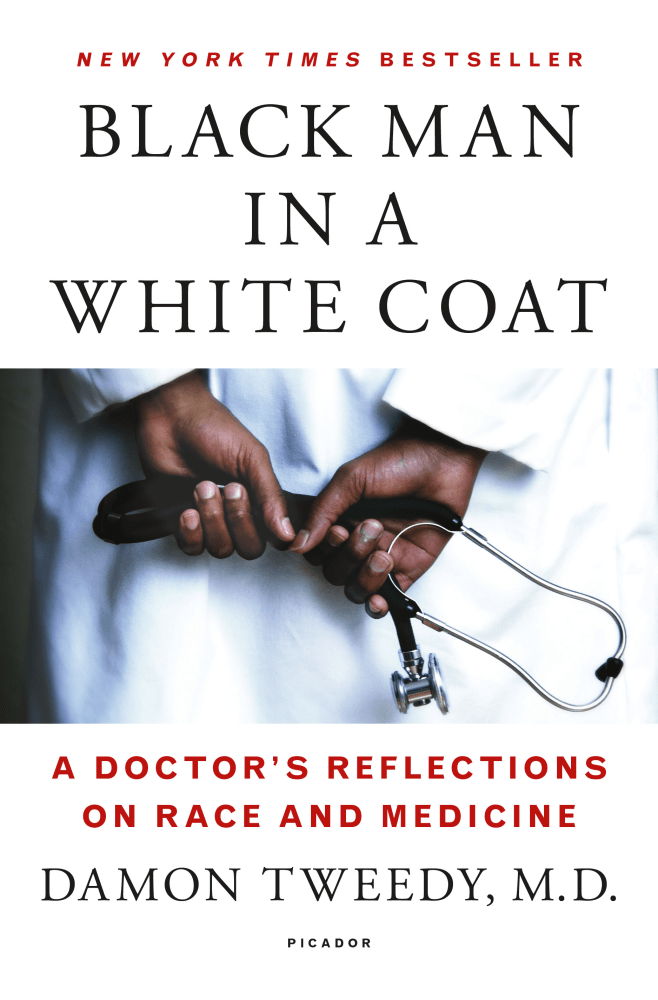
Black Man in a White Coat is a memoir written by Duke psychiatrist Damon Tweedy. So what's it like to be a black med student and doctor, and not just anywhere, but at Duke. Tweedy notes that he was accepted at other top medical schools, but that he went to Duke because the only way they could attract African American students was by giving large scholarships. That gives you a hint as to what the environment was like. So it's not surprising to read that Tweedy was standing with a classmate, purposefully dressed in a polo shirt and khaki's, only to have the professor walk into the lecture hall and ask if he was there to fix the lights. Ugh. So not specific to psychiatry, but a good read with important insights into how racial issues play out in medicine.

Moving on to fiction, you may remember Pete Earley from Crazy: A Father's Search Through American's Mental Health Madness. Pete is a mental health advocate, but at night, he steps into a phone booth (remember those?) and steps out dressed as a novelist. Paired with Newt Gingrich, this fabulous novelist duo has now written 3 books in a series: Duplicity, Treason, and now Vengeance. They follow Major Brooke Grant as she travels around the world chasing the Falcon, a dangerous terrorist who ultimately knocks off everyone Brooke loves (or almost). Vengeance is by far the best of the three books, and I don't want to say too much, because it's a better read without the plot spoilers.
Subscribe to:
Posts (Atom)